
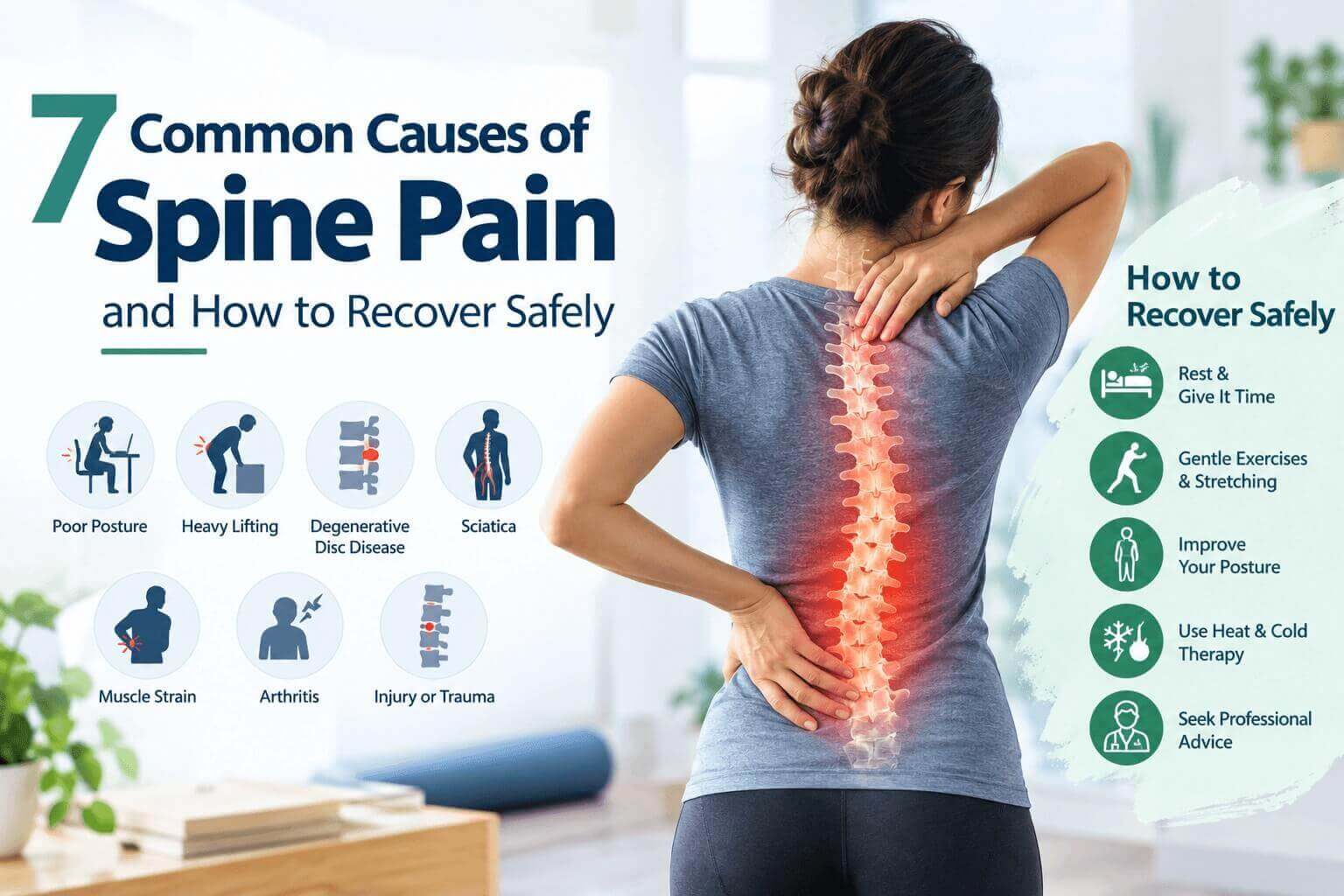
Summary: Spine pain comes from poor posture, strains, disc problems, spondylosis, stenosis, spondylitis, or injury. Stay gently active, correct posture, follow guided rehab, consult Dr. Bhatia in Hoshiarpur if pain persists.
Spine pain does not always hit fast. It can creep in and then fill up your day. It may start when you sit, lean forward, lie down, or even walk.
The hopeful part is that many spine issues get better with the right diagnosis and treatment. First, you need to know what is causing it.
If you want a spine doctor in Hoshiarpur, this piece lists frequent causes of spine pain. It also shares safer options for getting relief.
Seven usual reasons for spine pain
- Bad posture
Long stretches at a desk, or looking down at a phone, can pull on your neck and lower back. After a while, your muscles get tired. Your spine joints then take more stress. This is one of the top reasons people feel pain in the back and neck every day. - Muscle strain and ligament sprain
Trying to lift something too heavy, or twisting the body the wrong way, can stretch the muscles and ligaments that support the spine. The discomfort is often sharp. It tends to get worse when you move. With the right care, many strains calm down within a few weeks. - Bulging or slipped disc
The discs between the vertebrae work like shock absorbers. When a disc bulges or tears, it can irritate a nearby nerve. You might notice back pain plus numbness or tingling. Some people also feel pain that moves down the leg, which is often called sciatica. - Age-Related Spine Wear (Spondylosis)
Over time, the discs and the joints in the spine break down. This can happen often in the neck area and also in the lower back. A lot of people notice stiffness, mainly in the morning. Neck pain may come with tingling in an arm. - Narrowing of the Spine (Spinal Stenosis)
In this condition, the area around the spinal cord or nerves gets smaller. As a result, walking can feel hard in the legs. Some people feel heavy legs or get cramps while moving. Sitting down usually brings some relief. - Inflammation in the Spine (Spondylitis and Related Issues)
Not all back pain is from wear and tear. Some pain is linked to inflammation. Ankylosing spondylitis is one example. It can cause stiffness and pain that feel worse after resting. It is more common in younger adults. Getting checked early can reduce the chance of long-term stiffness. - Injury, Breaks, or Osteoporosis
A fall can hurt the spine. So can a car crash or an injury from sports. If someone has weak bones, even a small fall may lead to a compression fracture. Pain after any injury should be evaluated by a doctor. Do not brush it off.
When to See a Spine Specialist
Back pain that is mild can get better with rest. Still, get medical advice if any of these happen:
- Pain lasts past 2 or 3 weeks
- Pain moves into your arms or legs
- You have numbness, pins and needles, or weakness
- Pain wakes you up at night
- The pain started after a fall or an accident
Go to the emergency room right away if back pain comes with loss of bladder or bowel control, sudden weakness in a leg, or numbness near the groin.
How to Recover Safely
Stay Gently Active
Long bed rest often makes things feel worse. Short and easy walks can help your spine stay loose and can cut down stiffness.
Try heat or cold
Cold packs are useful in the first 48 hours after an injury. After that, heat may help tight muscles relax.
Support your posture
Sit so your back is supported and your feet rest flat. Take a quick break every 30 to 40 minutes.
Sleep with support
If you sleep on your side, put a pillow between your knees. If you sleep on your back, place a pillow under your knees. Pick a mattress that feels medium firm.
Avoid habits that can set you back
- Do not lift heavy items by rounding your back. Use your knees and hips instead.
- Do not keep using pain pills on your own for a long time.
- Do not copy random workouts from social media.
Use a rehab plan made for you
A physical therapist can guide you. They may suggest core strength work and other safe exercises. They can also flag moves that may not fit your specific issue.
Frequently Asked Questions
- How long does spine pain take to heal?
Muscle strains often improve in about 2 to 6 weeks. Disc or nerve issues may take more time, and it depends on how bad it is and what treatment you use. - Is rest good for back pain?
Rest for one or two days is okay. After that, light movement usually helps you heal faster than lying in bed for too long. - Do all spine problems need surgery?
No. Many people improve with medicines, physiotherapy, and changes in daily habits. Surgery is usually only looked at if other options do not work or if there is nerve injury. - Can bad posture really harm your spine?
Yes. If posture stays poor for a long time, it can cause ongoing pain, tightness, and faster wear in spinal discs and joints. - When should I visit a spine specialist in Hoshiarpur?
Go sooner if pain goes past two weeks, if it travels into your arms or legs, or if you feel numbness or weakness.
Expert Spine Care in Hoshiarpur
Spine pain should not run your life. A correct diagnosis now can help stop worse issues later.
Dr. Harpreet Singh Bhatia at Dr. Bhatia Joint Clinic provides a careful check and a plan made for you for back pain, neck pain, disc issues, spondylitis, and spine injuries.
📞 Book your appointment today at dr bhatia joint clinic and take the first step toward a pain-free spine.