
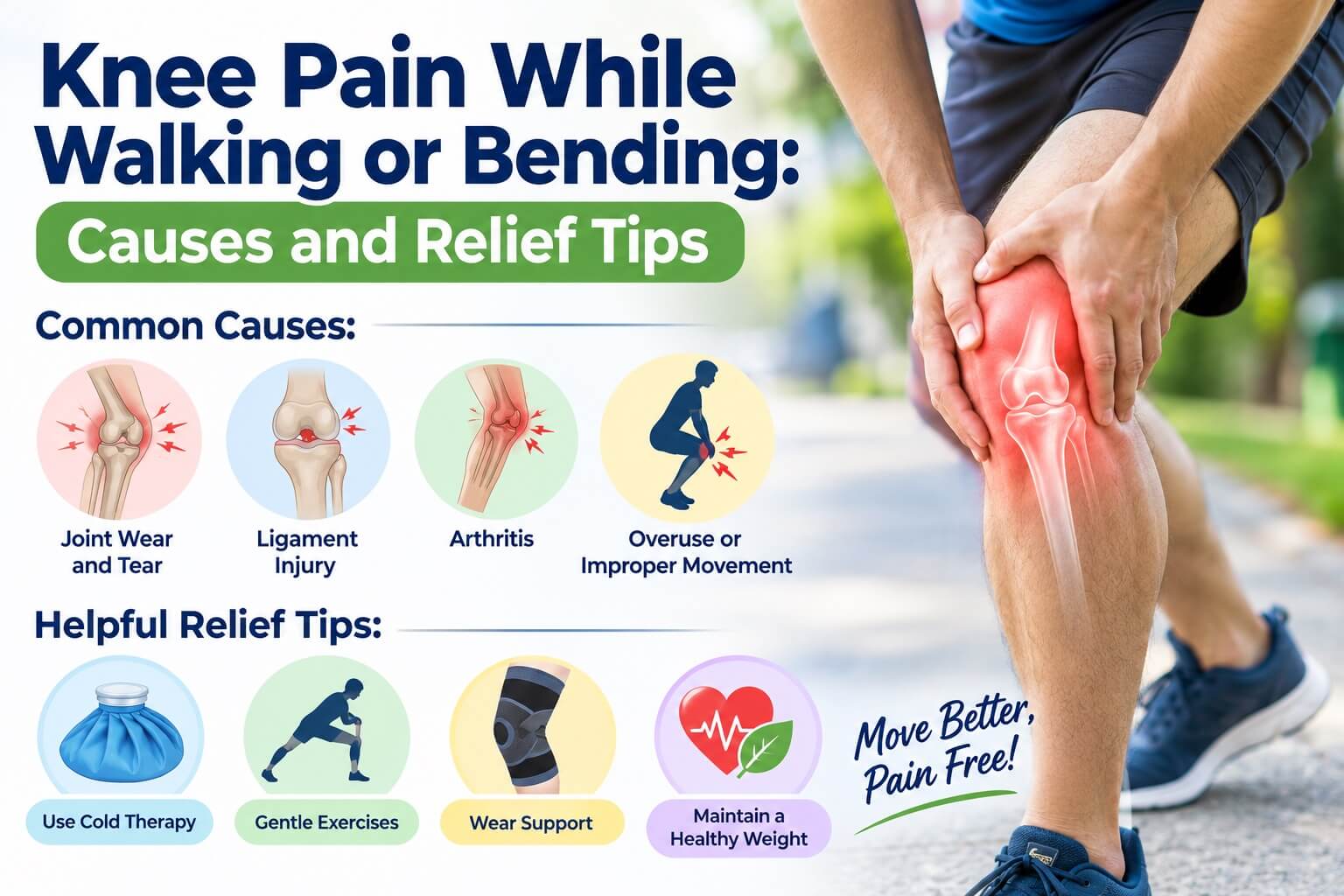
Summary:- Knee pain while walking or bending often points to arthritis, ligament strain, meniscus tears or overuse. Early diagnosis, simple home care and timely treatment in Hoshiarpur can restore comfortable movement.
Climbing stairs, standing up from a chair, or just walking a short distance should feel normal. If your knee hurts, clicks, or feels tight when you do these small daily tasks, that is a sign. Some people brush it off for a while. By the time they pay attention, the issue can be harder to calm down. Below are the likely reasons knee pain shows up when you walk or bend, which symptoms matter, and what may help.
Why knee pain happens when you walk or bend
Your knee is the biggest joint in your body. It must handle the load of your weight each time you move. It depends on bones, cartilage, ligaments, tendons, and muscles all working together. If one part gets strained or injured, pain may start during motion.
Common reasons
- Osteoarthritis: The cartilage layer thins over time. When that happens, the joint can feel sore and stiff. Swelling can also show up. Symptoms often feel worse after resting, or first thing in the morning.
- Meniscus tear: The meniscus acts like a cushion in the knee. A sudden twist, or deep bending like when squatting, can tear it. Some people notice catching or locking, or pain when bending.
- Ligament injuries (ACL, MCL): These can happen with sports or after an accident. The knee may feel loose, unstable, or like it may shift or give way.
- Patellofemoral pain (runner’s knee): This pain is felt around the kneecap, or sometimes behind it. Stairs and squats can make it worse. Long sitting can also trigger it.
- Tendinitis: Overuse can irritate a tendon near the kneecap. You may feel pain with jumping, climbing, or walking.
- Bursitis: Fluid filled sacs can become inflamed. This can cause swelling and tenderness. It can happen after kneeling for long stretches.
- Rheumatoid arthritis or gout: Inflammatory conditions can cause sudden swelling, warmth and severe pain.
- Excess weight and weak muscles: Every extra kilo adds strain on the knee with each step.
Persistent injuries from sport or work are a frequent cause too. Read our guide on sports injury treatment in Hoshiarpur for prevention and recovery tips.
Symptoms You Should Not Ignore
See an orthopaedic specialist if you notice:
• Pain lasting more than a week or two
• Swelling, redness or warmth around the knee
• Stiffness, especially in the morning
• Clicking, popping or grinding sounds with pain
• A knee that locks, buckles or feels unstable
• Difficulty straightening or fully bending the leg
• Pain at night or at rest
• Pain after a fall, twist or accident
Seek urgent care if you cannot bear weight, the knee looks deformed, or you have fever with a hot, swollen joint.
How Doctors Diagnose Knee Pain
A diagnosis usually begins with what you tell the clinician about your symptoms. It also includes a hands-on check of the knee. The exam looks at how far the joint moves, whether there is swelling, how stable it feels, and where it is tender.
After that, your clinician chooses tests based on what they find. You may get an X-ray to look at bone and the joint space. You may need an MRI to see cartilage, the meniscus, and ligaments. If inflammation is a concern, blood tests may be used. The reason this matters is simple. The right care depends on the true cause of the problem.
Home steps for knee pain can help when symptoms are mild.
Try this list:
Rest your knee, but keep moving in ways that do not flare pain.
Use ice for 15 to 20 minutes. Do this a few times each day for new injuries or swelling.
Add warmth if stiffness is the main issue, especially with longer-term aches.
Try a light compression wrap. Also raise the leg to help with swelling.
Do gentle motion. Straight leg raises, hamstring stretches, and easy walking can help keep the knee moving.
Watch your weight. Even small loss can lower the strain on the knee.
Wear shoes with solid support. Good footwear can reduce impact and help keep your alignment steady.
Skip deep squats and avoid long periods of kneeling until the pain eases.
Home care is meant for mild pain only. If you do not see any change after one or two weeks, get medical advice. Do not rely on painkillers by themselves.
Treatment Options for Knee Pain
Treatment depends on the cause and severity:
- Medication: Anti-inflammatory and pain-relief medicines, taken under medical guidance.
- Physiotherapy: Strengthening and flexibility exercises to support the joint and correct movement patterns.
- Injections: In selected cases, joint injections may be considered to reduce pain and inflammation.
- Bracing and supports: Help stabilise the knee during recovery.
- Arthroscopy: A minimally invasive procedure for certain meniscus or ligament problems.
- Knee replacement: Considered for advanced arthritis when other treatments no longer help.
Most people improve with conservative care when treatment starts early.
Tips to Prevent Knee Pain
- Warm up before exercise and stretch afterwards
- Strengthen your quadriceps, hamstrings and hips
- Maintain a healthy weight
- Avoid sudden increases in activity
- Use correct posture when lifting and squatting
- Do not ignore small aches
Expert Knee Care in Hoshiarpur
At Dr. Bhatia Joint Clinic, Dr. Harpreet Singh Bhatia provides careful evaluation and personalised treatment for joint and bone problems, from knee pain and arthritis to injuries. You can also explore our related services such as spine specialist care in Hoshiarpur and fracture and dislocation treatment in Hoshiarpur.
Frequently Asked Questions (FAQs)
1. Why does my knee hurt when I bend it?
Common reasons include meniscus tears, arthritis, patellofemoral pain or tendon inflammation. A clinical examination identifies the exact cause.
2. Is knee pain while walking serious?
Occasional mild pain may settle with rest, but pain lasting over a week, or with swelling or instability, should be examined.
3. Can knee pain go away on its own?
Minor strains often improve with rest and care. Structural problems like arthritis or tears usually need proper treatment.
4. Which exercises help knee pain?
Gentle quadriceps strengthening, hamstring stretches and straight leg raises usually help. Do them only after medical advice if pain is severe.
5. When should I see a knee specialist?
If pain persists, the knee swells, locks or gives way, or you struggle with stairs, consult an orthopaedic doctor.
6. Is surgery always needed for knee pain?
No. Most cases improve with medication, physiotherapy and lifestyle changes. Surgery is considered only for selected conditions.
📞 Book Your Knee Consultation Today
Don’t let knee pain slow you down. Visit Dr. Bhatia Joint Clinic in Hoshiarpur for accurate diagnosis and effective treatment. Book an appointment or visit drbhatiajointclinic.com today.