
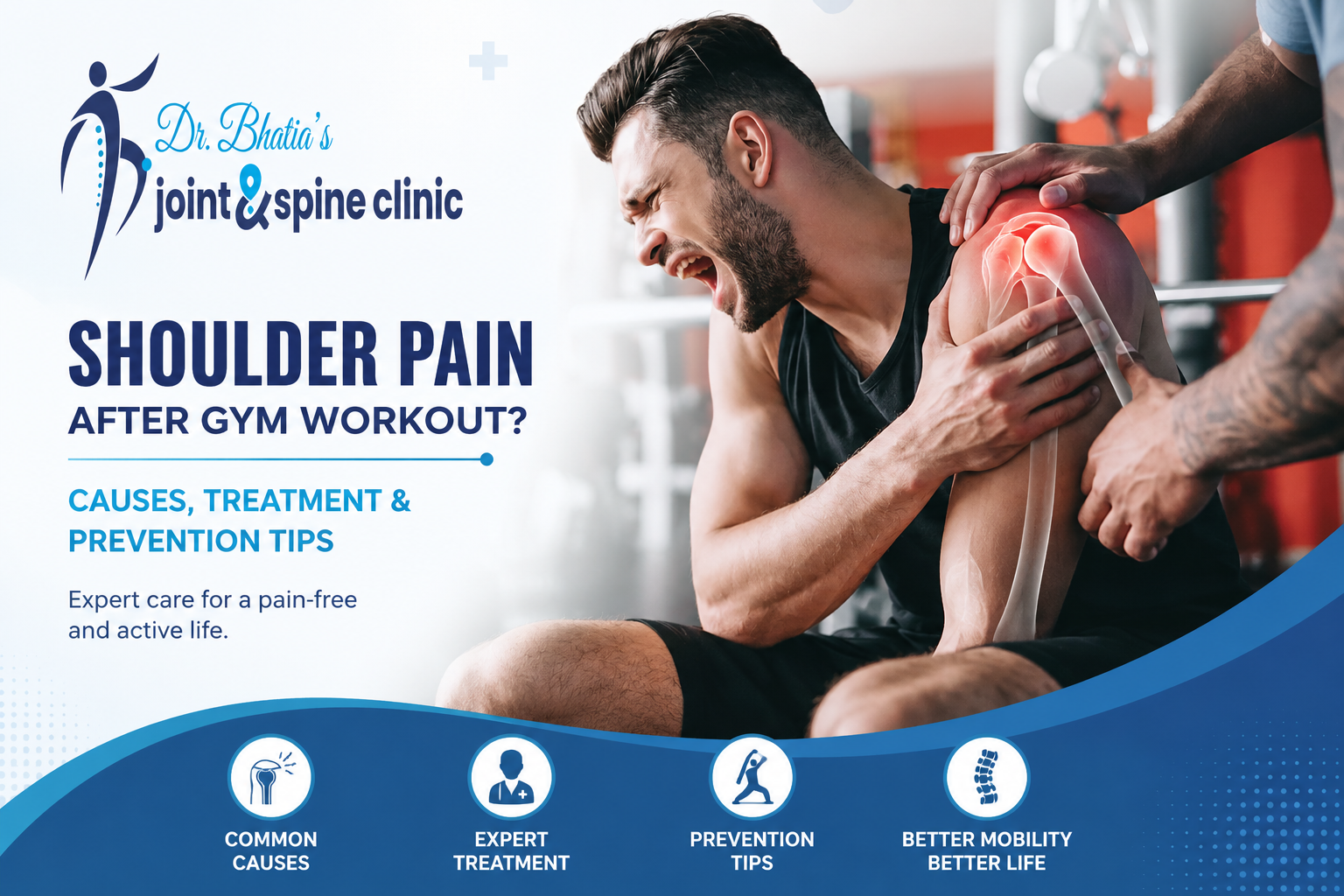
If you hit the gym regularly and you’ve started noticing this nagging ache in your shoulder, maybe it shows up during bench press, overhead press, or even just when you lift your arm to comb your hair, you’re not by yourself. Shoulder pain after workouts is one of the most common complaints that orthopaedic doctors see, especially with people who train in gyms around Hoshiarpur and nearby zones, often without proper coaching on form or recovery.
Your shoulder is the most mobile joint in the human body, and, honestly that same flexibility is also what makes it extra vulnerable to injury. Knowing what triggers the pain, how to handle it, and how to get back to training safely can really keep you away from stubborn, long-term joint problems.
Why Shoulder Pain Starts at the Gym
Shoulder pain while during or after gym sessions usually lands in one of these buckets, even if you’re not sure which one at first.
1. Rotator cuff strain , basically these are small muscles and tendons that help keep the shoulder joint steady. If you’re doing heavy pressing, your technique is off by a little, or you lift past what your body can handle, those tissues can get strained or sometimes partially torn.
2. Shoulder impingement , this is when the tendons get sort of pinched between the bones of the shoulder during overhead work. Think shoulder press, lat pulldowns, or swimming style drills. Usually you feel sharp pain when the arm goes up past your head.
3. Tendonitis , repeated overhead motion without enough rest can inflame the tendons around the shoulder. Then you get a burning, or a deep aching kind of pain that gets worse the more you move around.
4. Bad form or overtraining , lifting too heavy, skipping warm ups, or using the wrong setup during bench press, push-ups, or dips adds stress you didn’t need to place on that joint. Also doing the same pressing movements every single day with no rest is a classic mistake, especially for beginners.
5. Muscle soreness vs injury, mild soreness that shows up a day after a new exercise (DOMS—Delayed Onset Muscle Soreness) is pretty normal and it usually settles within about 2–3 days. But if the pain is sharp, keeps coming back, or is getting worse over time, that can mean something more real, and it’s worth getting checked by a medical professional.
How to Treat Shoulder Pain After the Gym
Step 1 : Stop and Assess don’t just power through sharp pain. If you keep training on an injured shoulder, even a small strain can quietly turn into something way worse like a serious tear, so yeah pause.
Step 2 : Rest and Ice for the first 24–48 hours, put an ice pack on it to help calm inflammation and swelling. During this window, skip those movements or exercises that seem to provoke pain, even a bit.
Step 3 : Switch to Heat Therapy once the initial inflammation calms down, gentle heat therapy can help circulation move better and it can speed up recovery.
Step 4 : Get a Proper Diagnosis if the ache hangs around more than a few days, if your range of motion feels limited , or if you notice swelling, weakness, or numbness , then it’s time to see an orthopaedic specialist. A hands on assessment, sometimes with an ultrasound or MRI behind it, can clarify whether it’s basically a simple strain, tendonitis, impingement, or even a rotator cuff tear.
Step 5 : Targeted Treatment based on what they find, treatment might involve anti inflammatory medication , physiotherapy, adjusting your activities, or in tougher situations a structured rehabilitation program. In most cases, gym related shoulder issues respond really well to non surgical care when they’re spotted early.
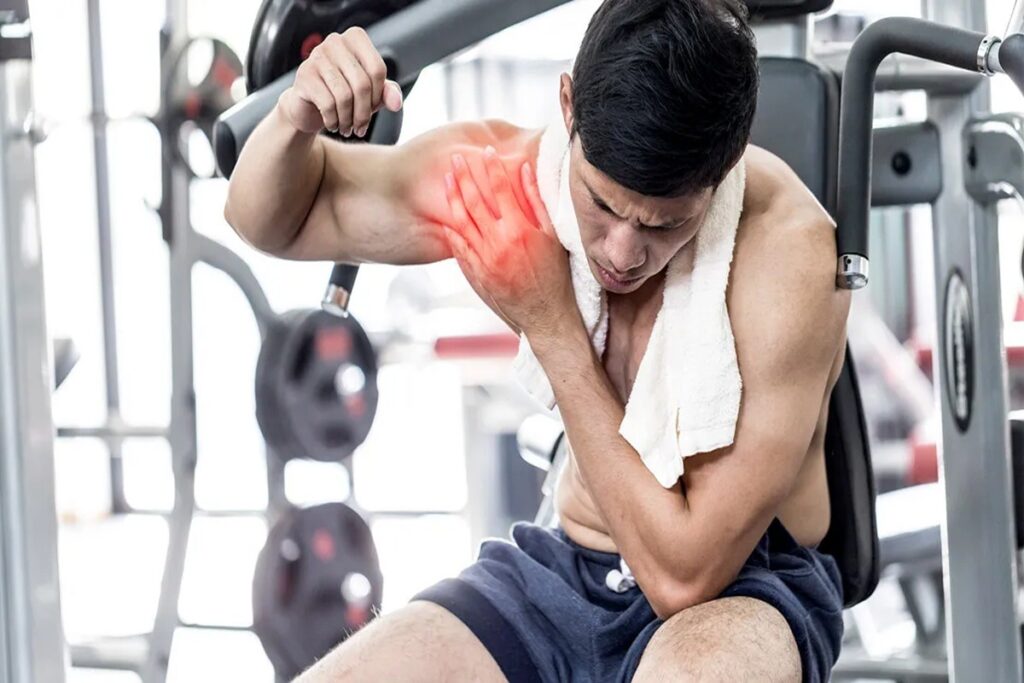
How Recovery Works
Recovery isn’t about avoiding the gym altogether — it’s about training smart while your shoulder heals. A good rule your specialist will guide you on: use the gym, don’t leave the gym. This means adjusting resistance, reducing reps, or temporarily switching to pain-free movement patterns instead of stopping activity completely.
A typical recovery path looks like:
- Acute phase (first few days): Rest, ice, and avoiding painful movements.
- Early mobility phase: Gentle stretching to restore range of motion without strain.
- Strengthening phase: Controlled exercises to rebuild stability in the rotator cuff and surrounding muscles.
- Return-to-gym phase: Gradual reintroduction of pressing and overhead movements with correct form.
Exercises Recommended After Treatment
Once your specialist clears you to begin rehab exercises, these are commonly used to restore strength and prevent re-injury:
- Pendulum swings – gentle passive movement to ease stiffness
- Wall slides – improves shoulder blade mobility and posture
- External rotation with light resistance band – strengthens the rotator cuff
- Scapular squeezes – builds shoulder blade stability
- Assisted shoulder flexion stretch – restores overhead range of motion
- Isometric shoulder holds – rebuilds strength without joint strain
These should always be done under guidance initially, with gradual progression in resistance and range as pain reduces.
Preventing Shoulder Pain in Future Gym Sessions
- Always warm up with dynamic shoulder mobility drills before lifting
- Avoid jumping to heavy weights too quickly — progress gradually
- Maintain correct posture and form during presses and pulls
- Balance pushing exercises (bench press, shoulder press) with pulling and rotator cuff strengthening work
- Take adequate rest days between upper-body sessions
- Don’t ignore early signs of discomfort — early correction prevents long-term injury
When to See a Shoulder Pain Specialist in Hoshiarpur
You should book a consultation if you notice:
- Pain that doesn’t improve after a few days of rest
- Swelling, bruising, or visible deformity around the shoulder
- Difficulty lifting the arm or reaching behind your back
- Weakness, tingling, or numbness radiating down the arm
- Pain that disturbs your sleep
Early evaluation makes a significant difference in recovery time and outcome. Left untreated, minor strains can progress into chronic conditions like frozen shoulder or full rotator cuff tears requiring surgery.
Frequently Asked Questions
Q1. Is it normal to have shoulder pain after every gym session?
Like mild soreness after a new or intense workout is pretty normal and it should fade within 2–3 days. But pain that keeps hanging around, gets worse, or shows up again after every session isn’t normal, and yeah it needs to be checked out.
Q2. How long does gym related shoulder pain take to heal?
A minor strain usually gets better in about 1–2 weeks, with rest and proper care. Rotator cuff issues, or tendonitis, can take 4–8 weeks or even more, depending on the severity and how quickly treatment actually starts.
Q3. Can I keep gym training if my shoulder hurts?
Often you can continue training other muscle groups, but any exercise that directly taxes the painful shoulder should be paused or at least modified until a specialist looks at what’s going on.
Q4. Which exercises should I avoid if my shoulder hurts?
Skip overhead presses, heavy bench press, dips, and upright rows until the cause is figured out, and you’re guided through a safe return to training plan, not just guesswork.
Q5. Do I need surgery for shoulder pain that comes from the gym?
Most gym related shoulder injuries — strains, tendonitis, mild impingement — generally settle well with physiotherapy and smarter activity changes. Surgery is usually only considered for severe cases, like a complete rotator cuff tear that doesn’t improve with conservative treatment.
Q6. When should I see a doctor instead of just resting at home?
f the pain lasts more than a week, if your range of motion is really limited, or if you get swelling, weakness, or numbness, then consult a shoulder pain specialist instead of continuing self-treatment.
If gym-related shoulder pain is holding you back from your fitness goals, timely diagnosis and the right treatment plan can get you back to training safely. Consult a shoulder pain specialist in Hoshiarpur for a proper evaluation and personalised recovery plan.