

Summary: Joint pain can have various causes, including osteoarthritis, injuries, inflammation, autoimmune disorders, and metabolic conditions. This article explains common symptoms such as stiffness, swelling, acute or chronic pain, and mobility issues.It also highlights the importance of timely joint evaluation at Dr Bhatia Joint Clinic in Hoshiarpur.
Joint pain can show up in people at almost any stage of life, it can be a bit random at first. For some it’s like occasional discomfort after physical activity, for others it slowly turns into a daily issue that makes walking, working, sleeping, and other routine tasks feel harder. Knowing the possible causes matters, because it can help someone judge when it might be time for a proper medical checkup.
At Dr Bhatia Joint Clinic, patients in Hoshiarpur and also across India can look for support for different problems that involve joints. Joint pain itself is not really a disease on its own, it’s more like a sign, a symptom that can appear after injury, inflammation, age related changes, or because of some other medical condition that is happening in the body.
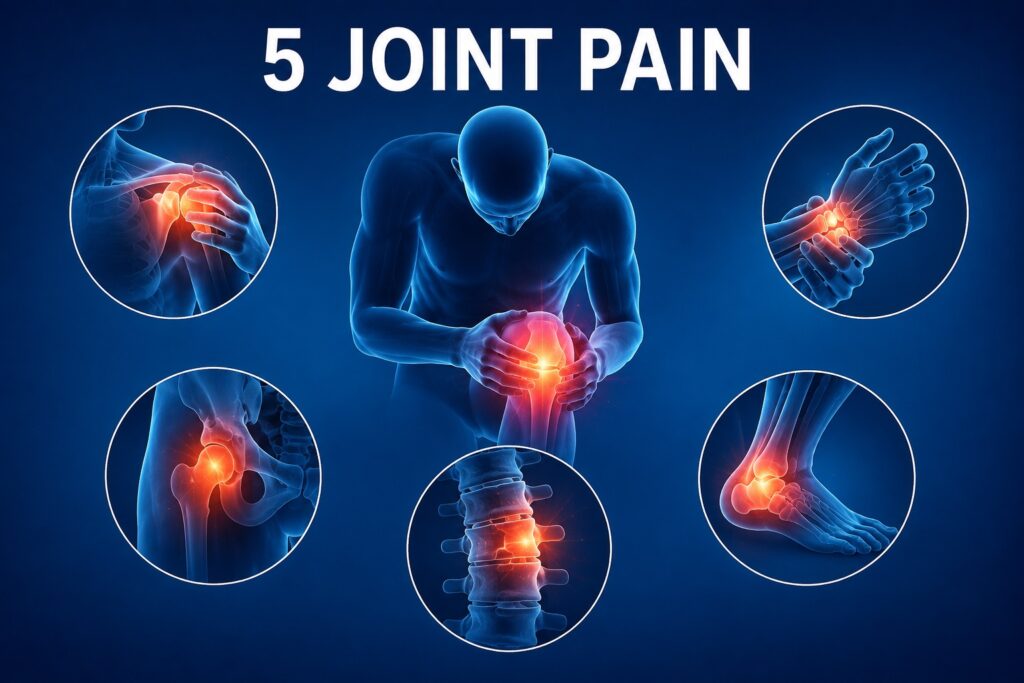
Here are five frequent causes that, honestly, every patient should be aware of.
1. Osteoarthritis and age tied joint degeneration
One of the more common reasons behind joint pain is osteoarthritis. This condition is linked to slow changes inside the joint, especially the gradual breakdown or wear of the cartilage, the tissue that usually lets bones glide smoothly against each other.
As the cartilage decay continues, the joint that’s involved may start showing stiffness, tenderness, swelling, and a general sense of aching discomfort. The knees, hips, hands, and spine are often involved, sometimes all at once too, or at least that’s what patients report.
As people get older, there is an increased chance of osteoarthritis showing up, though it isn’t the only reason. There can be earlier injuries, excess strain on a joint , certain types of work, and even body weight. All of these can help nudge the joint toward degeneration, bit by bit
Sometimes patients first feel something off during everyday movement. Like climbing stairs, walking for longer spells, or standing up after sitting for a while. Over time, as things progress, the limits in movement may become a lot more clear, and daily tasks can start to feel more difficult
2. Arthritis and Inflammation
The word arthritis, covers a pretty broad set of problems that can affect joints. Some forms are mostly “wear and tear”, while others have more to do with a strange immune reaction.
When inflammation is happening inside a joint or even around it, you might notice pain , warmth, swelling , and stiffness. Depending on the cause, symptoms might stay in just one joint, or they could spread across multiple joints
Rheumatism is another phrase people use now and then, kind of as a general label for joint pain, trouble in muscles, and tissues nearby. But if symptoms linger, it shouldn’t just be brushed off as normal ageing, or “regular rheumatism”.
If inflammation keeps going for a long time, it can start to disrupt how you move, and also interfere with routine activities. Getting a proper assessment matters, because it can point to the real source instead of treating joint pain as if it were one single thing
3. Injuries and Muscle Strain
Joint pain does not always mean arthritis. Sports mishaps, falls, awkward twists, repetitive habits, and overuse can all trigger aches around a particular joint.
A muscle strain can create discomfort close to a joint and in some cases it’s hard to tell if the issue is really in muscle or the joint itself. Ligament and tendon injuries can also bring on pain, swelling, and reduced range of motion, so the pattern matters
In some cases, the pain is acute, it shows up suddenly after an injury or some unusual physical activity. Rest and appropriate care can help with minor issues, but significant swelling,severe pain, instability, or not being able to put weight on a limb at all means you really should seek medical attention.
Repeated injuries without enough recovery time may also add up, and slowly contribute to long-term joint problems and degeneration , over time.
4. Autoimmune Disorders
Some joint conditions happen because the immune system mistakenly targets healthy tissues. These conditions are called autoimmune disorders.
Inflammatory types of arthritis can bring prolonged joint pain, morning stiffness, swelling, and reduced movement. Sometimes symptoms involve several joints, on both sides of the body, so it’s not just one isolated spot.
Unlike a simple injury, autoimmune related joint problems can continue or come back even when there is no clear physical trigger. Early recognition matters a lot, because long-lasting inflammation can gradually harm joint structures.
People who notice persistent swelling or stiffness, especially when multiple joints are involved, should think about a professional evaluation, instead of depending only on short term pain relief.
5. Metabolic and Other Underlying Conditions
Certain metabolic disorders can contribute to joint symptoms. For instance, abnormal levels of substances in the body can lead to crystal deposits inside the joints, which can set off intense inflammation and pain.
These episodes may arise abruptly and they can feel truly exhausting. In other situations, an underlying metabolic or systemic condition might be part of why joint problems keep returning.
That is why the cause of joint pain cannot always be narrowed down just by checking where the pain is located. A person’s medical history, the pattern of symptoms, what a physical examination shows, and when needed, diagnostic tests can all help establish the underlying problem.
When Is Joint Pain a Reason for Medical Evaluation?
Occasional discomfort after hard exertion might calm down with proper rest, but if it keeps showing up or comes back over and over it really deserves more focus. A person could find it useful to get a professional look when there is joint pain that continues or repeatedly returns, or when stiffness and swelling stay around, or when walking becomes difficult, or normal daily tasks start feeling harder than usual.
Also, reduced range of motion, pain after an injury, sudden severe pain, symptoms that seem to involve several joints at the same time, and long lasting pain that messes with sleep or day to day life are all pretty good reasons to get assessed early.
Early checking can help tell apart what might be a temporary strain from arthritis, osteoarthritis, inflammatory problems, an injury, or other causes that sound similar at first.
How can Patients protect their joint health ?
Joint well being usually depends on multiple pieces. Keeping an appropriate amount of physical activity, steering clear of avoidable joint strain, managing body weight when it’s relevant, and sticking to medical guidance after an injury can all support smoother movement.
People who already have joint conditions may also do better with a tailored exercise plan plus a rehabilitation pathway. The best plan depends on what’s actually going on underneath, because what helps one situation may not fit another at all.
Most of all, ongoing joint discomfort should not just be brushed off. Catching it earlier may stop a situation that is still manageable from turning into a bigger mobility problem later on.
Frequently Asked Questions
1. What are the most common causes of joint pain?
Common causes include osteoarthritis, inflammatory arthritis, injuries, muscle strain, autoimmune disorders, and certain metabolic disorders. The exact cause depends on the patient’s symptoms and medical history.
2. Is joint pain always caused by arthritis?
No. Joint pain can result from injuries, overuse, muscle strain, inflammation, infections, metabolic conditions, and other problems. Arthritis is only one possible cause.
3. What is the difference between acute pain and chronic pain.
Acute pain usually shows up very fast, and it can show up after an injury, or because of a short-term condition. Chronic pain, well it tends to linger, or return again and again for a longer span of time and often needs assessment so the actual reason can be figured out.
4. Can osteoarthritis cause stiffness and swelling?
Yes, it can. Osteoarthritis may lead to joint stiffness, discomfort, a decrease in range of motion, and sometimes swelling too, specially after you have been active, or if you’ve been inactive for too long, like sitting quietly for hours.
5. When should someone consult a joint specialist?
A person should think about getting a professional evaluation when joint pain is persistent, very intense, keeps coming back, or when there is noticeable swelling, or if it started after an injury. Also, if it begins to mess with walking, work, sleep, or normal daily routines then it’s time.
Conclusion
Joint pain can come from lots of directions, like cartilage wear and osteoarthritis, but also injuries, inflammation, autoimmune issues, or even metabolic problems. Knowing the real cause is a key step toward selecting the right kind of care. For patients in Hoshiarpur and also around India, Dr Bhatia Joint Clinic offers a channel for professional checking of joint-related worries.
Persistent pain, ongoing stiffness, swelling, or trouble with movement shouldnt be taken as an automatic, normal part of ageing. A timely evaluation can support patients in understanding symptoms better, and then taking sensible steps for joint wellbeing.