Introduction
Unexpected movement on the football field. An odd pop in the knee. Then, some swelling and the feeling as though the knee might give way.
This is where a lot of ACL injuries originate.
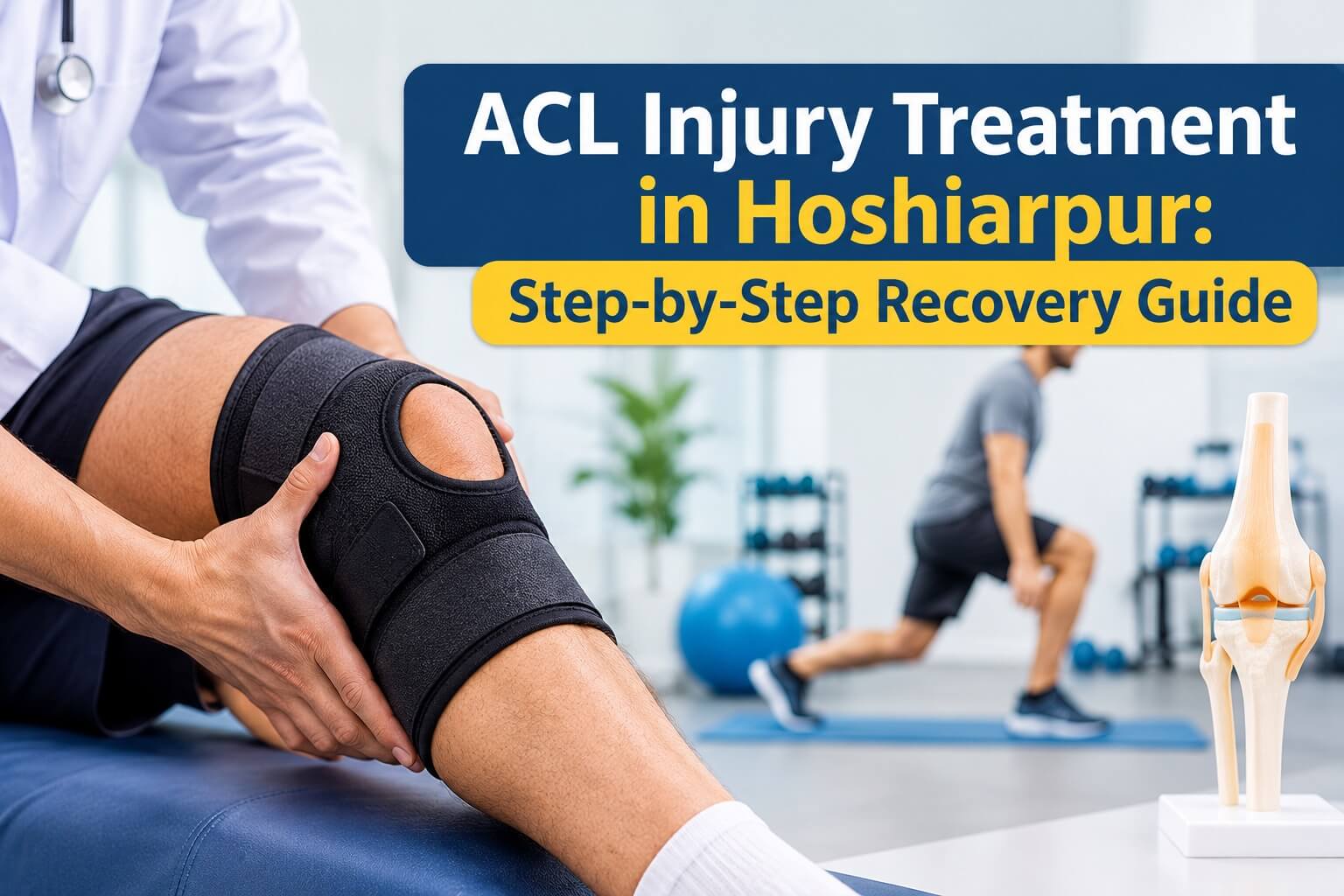
The silver lining is, once properly diagnosed, an effective rehab protocol allows most individuals to return to leading active lives. If you need help to treat an ACL injury in Hoshiarpur, this guide lays out the process in plain language.
What is an ACL Injury?
The Anterior Cruciate Ligament (ACL) is a band of strong, durable tissue located inside the knee. Its purpose is to support the stability of the lower leg bones in relation to the upper leg bone.
An ACL tear results in instability of the knee and interferes with a person’s ability to safely and easily move.
Torn ACLs often happen to athletes that play sports like cricket, football, kabaddi, volleyball, and basketball, and also with runners. In addition, tearing an ACL can happen to people in accidents like road accidents or when people have a bad fall.
The signs of an ACL Tear
There are a few key signs to look for after a knee injury. They include:
- A pop heard or felt during an injury
- Fast onset of swelling in the knee after injury
- Difficulty walking or rotating the knee
- A feeling that the knee is giving way
- Limited knee mobility
Do not disregard any of these symptoms. Prompt care ensures the rest of your knee structures (like your meniscus) remain intact.
Phase 1: Proper Diagnosis
Accurate identification of the injury sets the stage for a successful rehabilitation.
An orthopaedic surgeon assesses knee stability via several physical assessments such as the Lachman test, and an MRI shows the ligament injury in great detail and reveals any collateral ligament or meniscal injuries.
Diagnosis either directs you towards surgery or lets you choose an alternative method of treatment.
Step 2: Immediate Care (First Few Days)
In the first days, the goal is to calm the knee down.
- Rest the knee and avoid sports
- Ice it for 15–20 minutes several times a day
- Compress with a light bandage
- Elevate the leg above heart level
- Use crutches if walking is painful
Take medicines only as advised by your doctor.
Step 3: Choosing the Right ACL Treatment
Not every ACL tear needs surgery.
Non-Surgical Treatment
This may suit people with partial tears, lower activity levels, or those who do not play pivoting sports. Treatment focuses on physiotherapy, strengthening and activity changes.
ACL Reconstruction Surgery
Surgery is usually advised for young athletes, complete tears, and knees that keep giving way. It is often done by keyhole (arthroscopic) surgery.
The torn ligament is replaced with a graft, commonly taken from your own hamstring or patellar tendon. Small cuts mean less pain and faster early recovery.
Your surgeon will recommend the best option based on your age, activity, and MRI findings.
Step 4: Pre-Rehabilitation (Before Surgery)
Pre-rehab is often skipped, but it matters.
The aim is to reduce swelling, restore full knee straightening and rebuild thigh strength before surgery. A well-prepared knee generally recovers more smoothly.
Step 5: ACL Rehabilitation Exercises
Rehab is the heart of ACL recovery. Surgery repairs the ligament, but exercises rebuild the knee.
Phase 1: Weeks 0–2 (Protect and Move)
• Ankle pumps to improve circulation
• Heel slides for knee bending
• Quadriceps contractions
• Straight leg raises
• Gentle walking with support
Phase 2: Weeks 2–6 (Restore Motion)
• Full knee straightening and bending
• Stationary cycling
• Mini squats
• Weight shifting exercises
Phase 3: Weeks 6–12 (Build Strength)
• Leg press and step-ups
• Hamstring curls
• Balance training
• Calf raises
Phase 4: Months 3–6 (Advanced Strength)
• Controlled lunges and squats
• Light jogging, once cleared
• Core and hip strengthening
Phase 5: Months 6–9 (Return to Sport)
• Agility drills and sport-specific training
• Jump and landing practice
• Strength tests compared with the healthy leg
Timelines vary from person to person. Never rush a phase.
Step 6: Returning to Sports Safely
Feeling good is not the same as being ready.
Return to sport only when your knee is stable, strength is close to your other leg, and your doctor clears you. Going back too early raises the risk of re-injury.
Most athletes return between 9 and 12 months after surgery.
Tips for a Faster, Safer Recovery
• Follow your rehab plan every day
• Attend all follow-up visits
• Eat protein-rich food and stay hydrated
• Avoid smoking, as it slows healing
• Warm up properly before sports
• Report sudden pain or swelling early
Why Choose Dr. Bhatia Joint Clinic for ACL Injury Treatment in Hoshiarpur?
At Dr. Bhatia Joint Clinic, every knee injury gets a careful assessment and a plan built around your goals.
Dr. Harpreet Singh Bhatia guides patients from diagnosis to full recovery, with clear explanations at every step. Whether you are an athlete, a student or someone who simply wants to walk without fear, you get honest advice.
Frequently Asked Questions (FAQs)
- Can an ACL tear heal on its own?
A complete ACL tear does not heal by itself. Some partial tears settle with physiotherapy, but a specialist should examine your knee to decide. - Is ACL surgery always necessary?
No. Surgery is usually advised for active people and for knees that remain unstable. Others may do well with rehab alone. - How long does ACL recovery take?
Full recovery usually takes 6 to 12 months. Daily activities return much sooner, but sports need more time. - Is ACL surgery painful?
Keyhole surgery causes less pain than open surgery. Pain is managed with medicines, ice and early guided movement. - When can I walk after ACL surgery?
Most people walk with support within a day or two. Your doctor will tell you when to stop using crutches. - When can I drive or go back to work?
Desk work is often possible in 2–3 weeks. Driving depends on which leg was operated and your control of the knee. Ask your doctor first. - Can I play sports again after an ACL injury?
Yes, most patients do, once strength, balance and stability are restored and the doctor gives clearance. - When should I see a doctor for knee pain?
Visit a specialist if you have swelling after injury, a popping sound, or a knee that feels unstable
Book Your Consultation Today
Knee instability will not fix itself, and waiting can damage the cartilage and meniscus.
If you need ACL injury treatment in Hoshiarpur, get the right diagnosis and rehab plan now.
Book your appointment with Dr. Harpreet Singh Bhatia at Dr. Bhatia Joint Clinic, Hoshiarpur.
Call or visit: dr bhatia joint clinic