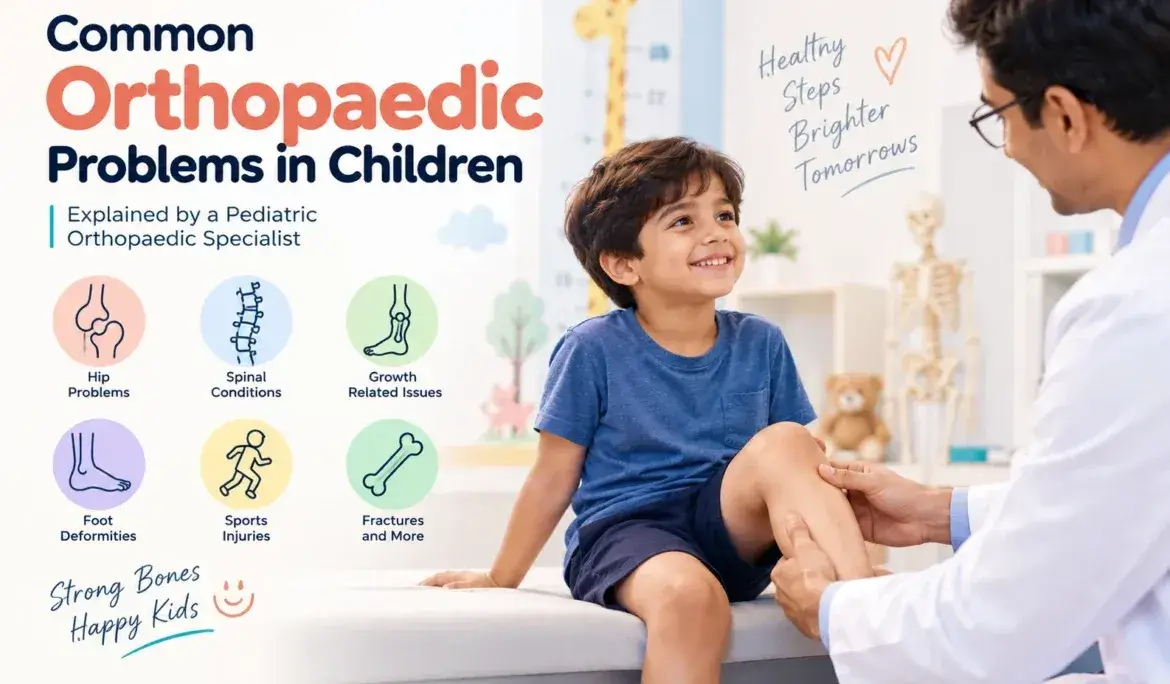
Short Summary: Kids’ bones, joints, and muscles are still growing. Because of that, they can get several orthopaedic problems. Some examples are flat feet and bow legs. Others include fractures, growing pains, and posture troubles. Dr. Harpreet Singh Bhatia is known for paediatric orthopaedic care in Hoshiarpur. He helps parents spot these issues early. When problems are noticed sooner, treatment can help stop long-term complications. In this blog, we look at common childhood orthopaedic issues. You will also see typical symptoms, possible causes, and treatment options.
Why Children Need Specialised Orthopaedic Care
A child’s bones and muscles are not just a smaller adult model. In kids, the growth plates are still active, the bones are softer, and the joints are still forming. Because of that, injuries and deformities can look and behave differently than they do in grown-ups.
Sometimes a break that looks small can reach the growth plate. When that happens, the way the bone grows later can change over time. That is why parents in Hoshiarpur look for paediatric orthopaedic support that fits a child’s age, not a generic plan.
Dr. Harpreet Singh Bhatia focuses on spotting these problems early. Families in Hoshiarpur and nearby places can get help from child-focused orthopaedic specialists.
Common Orthopaedic Problems Seen in Children
- Flat Feet (Pes Planus)
A lot of small kids look like they have flat feet because the arch is still growing. For most children, the feet improve by around age six. If flat feet keep going and the child has pain or stiffness, or struggles to walk, a checkup is important.
You may notice: foot pain after running or play, shoes that wear unevenly, trouble with balance, and kids saying their legs feel tired.
This can happen from delayed arch buildup, a tight Achilles tendon, loose ligaments, or sometimes family traits.
For care, doctors often start with watching if symptoms are mild. Other options include custom shoe inserts and stretching. In rare, serious cases, surgery may be needed.
- Bow Legs and Knock Knees
It is normal to see bowed legs in toddlers. Many young kids also develop knock knees during growth. Most of the time, this settles on its own. If it does not improve after a certain age, it can point to an issue like rickets or Blount’s disease.
Common signs include legs that curve clearly, a gait that looks uneven, and knee pain when the child is active.
Possible causes include normal growth differences, low vitamin D, or problems at the growth plate.
Treatment can mean better nutrition, follow ups over time, bracing, or a surgical growth approach if the problem stays.
- Growing Pains
Growing pains are one of the most frequently reported complaints in children aged 3 to 12, typically affecting the legs in the evening or at night.|
Symptoms: Aching in the thighs, calves, or behind the knees; pain that resolves by morning; no swelling or redness.
Causes: Rapid bone growth, muscle fatigue from daily activity; the exact cause remains unclear.
Treatment: Gentle massage, warm compresses, stretching, and reassurance. Persistent or one-sided pain warrants a check-up to rule out other conditions. - Fractures and Sprains
Children are naturally active, which makes falls, sports injuries, and playground accidents common causes of fractures and sprains. Because their bones are more flexible than adult bones, children often experience unique fracture patterns like greenstick fractures.
Symptoms: Swelling, visible deformity, refusal to bear weight, localized tenderness.
Causes: Falls, sports injuries, accidents during play.
Treatment: Immobilisation with casts or splints, pain management, and in some cases, minor surgical intervention. Prompt evaluation helps protect the growth plate and ensure proper healing. - Scoliosis and Postural Issues
Scoliosis, an abnormal sideways curvature of the spine, often develops during growth spurts, especially in early adolescence. Early detection is key to preventing progression.
Symptoms: Uneven shoulders or hips, one shoulder blade more prominent than the other, clothes fitting unevenly.
Causes: Idiopathic (most common), congenital spinal abnormalities, neuromuscular conditions.
Treatment: Regular monitoring for mild curves, bracing for moderate cases, and surgery for severe or progressive scoliosis. - Developmental Dysplasia of the Hip (DDH)
DDH is a condition where the hip joint doesn’t form properly, usually identified during infancy through routine screening.
Symptoms: Uneven leg length, asymmetrical thigh folds, clicking sound in the hip, delayed walking.
Causes: Genetic factors, breech birth position, tight swaddling in infancy.
Treatment: Harnesses or braces in infants, and surgical correction if diagnosed later in childhood. - In-Toeing and Out-Toeing
Parents often notice their child’s feet turning inward or outward while walking or running.
Symptoms: Feet pointing inward/outward during walking, occasional tripping.
Causes: Rotational variations in the thigh bone (femur) or shin bone (tibia), foot shape. Treatment: Most cases resolve naturally with growth. Physiotherapy or bracing is considered only in persistent or severe cases.
When Should Parents Seek Orthopaedic Consultation?
- Growing pains
Many kids get aches that fade as they grow. Still, a parent should see a specialist in Hoshiarpur if any of these show up:
- Pain that does not ease after a few weeks
- Limping or a child who will not walk
- A limb looks crooked, or one side looks different from the other
- A joint that looks swollen, red, or hot
- Slow progress with movement skills compared with other kids
Getting help early through paediatric orthopaedic care can help avoid later problems. It also supports strong, working bones and joints as the child grows.
Conclusion
Orthopaedic issues in childhood can be mild and go away. Some need close care and active treatment. Knowing which situation you are dealing with matters. It also helps a child stay comfortable and move well over time. Dr. Harpreet Singh Bhatia supports families across Hoshiarpur with careful checks and treatment plans that fit the child’s age and stage of growth.
Frequently Asked Questions (FAQs)
Q1. When do flat feet in kids need treatment?
Flat feet are often normal in early childhood, up to about age six. If your child has pain, stiffness, or trouble walking after that age, get them checked by a clinician.
Q2. Are bow legs in toddlers a real concern?
Some bowing shows up in toddlers and can be seen up to age two or three. In many kids it improves on its own. If the bowing keeps getting worse, or does not improve, have a doctor take a look.
Q3. How do I know growing pains are not something worse?
Growing pains usually affect both legs. They are often worse in the evening. By morning, the discomfort usually settles down, and there is no swelling. If pain is mostly on one side, or there is swelling, or it lasts into the day, see a specialist.
Q4. Can you check for scoliosis at home?
Look for uneven shoulders. Also watch the waistline, since one side may look different. Some kids show a more noticeable shoulder blade on one side. If you see any of these signs, follow up with a professional exam.
Q5. Does a child with an orthopaedic issue always need surgery?
No. Many problems are handled without surgery. This includes observation, physiotherapy, or a brace in some cases. Surgery is usually for severe problems or cases that are getting worse over time.
Q6. When should I visit a paediatric orthopaedic specialist?
Go sooner if your child has ongoing limping, joint pain, a clear change in shape, or delayed walking milestones. It is a good idea to arrange a paediatric orthopaedic consultation in Hoshiarpur right away.